
Match staffing to real demand. Every shift.
Every location.
Rosnet uses your actual sales history to forecast demand and build schedules 75% faster, with real-time labor cost visibility across every location.

Trusted by thousands of locations














How much is gut-feel scheduling actually costing your restaurants?
Labor is the second largest controllable expense in every restaurant. And the process behind it looks the same at every location: a GM, a spreadsheet, and a best guess.

Scheduling takes hours
GMs are spending two, three, four hours a week building schedules manually when they should be on the floor running the restaurant.

Every location does it differently
Without a shared forecast or a consistent process, there's no way to compare labor performance across your portfolio.

Staffing misses the actual demand
Without a forecast tied to real sales history, schedules don't reflect what the restaurant actually needs.
The demand-based scheduling your GMs will actually use
Above-store leaders get real-time labor cost visibility. GMs get a tool that takes minutes instead of hours.

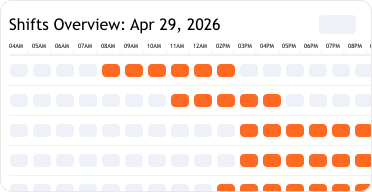
Staff to what your restaurant actually needs
Rosnet uses your actual sales and cover history to project demand by daypart and location. GMs build schedules against a real forecast instead of working from memory, and matrix testing lets you see the projected labor cost impact before a schedule goes live.


Drag-and-drop for fast scheduling
What used to take hours takes minutes, and every schedule is built against the same data and the same standards across every location.
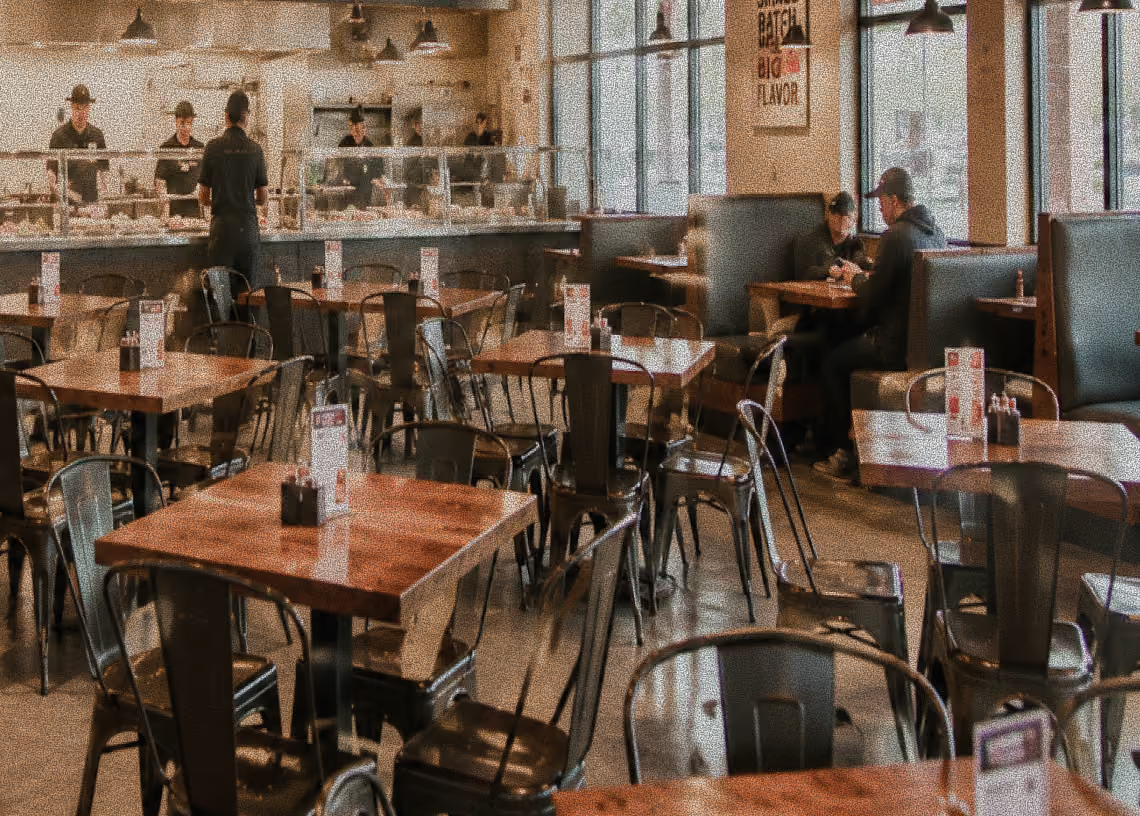

Above-store visibility into labor cost
No more waiting for the weekly report. Spot coverage gaps, overtime trends, and labor cost variance while there's still time to do something about it.
Proven Results across thousands of locations
Every day, restaurants are benefiting from Rosnet’s software. These are the outcomes real customers experience.
30-60 Min
Saved per store per week on inventory
75%
Faster schedule generation
2%
Average food cost savings
Operators trust Rosnet
to run their numbers

"Rosnet's customer response and availability is top notch. They're available 24 hours a day, seven days a week. I've got stories of DMs and GMs calling up on Christmas."

"A couple of benefits working with Rosnet are the accessibility to immediate data and the time savings of doing inventory. Having mobile accessibility to do inventory on your phone has cut our inventory process by half."

"We like Rosnet because it doesn't allow errors to compile. If there's an error that happens in any one of the restaurants, the whole thing shuts down and makes us fix that error before it moves forward and contaminates the data even more. So for us in running the business, having that data is some of the most important stuff and having the data correct is the most important thing. It's the piece that we love the most."

"Our company has been using Rosnet for over 20 years and we always appreciate the personalized service and attention in the customer client support that we get. I meet with my Rosnet client services manager once a week and they solve all kinds of problems for me, but it's really personalized and they're industry experts."
Explore Labor Management in detail
Dig deeper into how Rosnet handles scheduling, forecasting, and the employee-facing tools that keep your team connected.

Scheduling & Forecasting
Build demand-based schedules from actual sales history, test labor cost impact before publishing, and manage coverage across every location from one place.

StaffLinQ Employee App
Your employees view schedules, swap shifts, request time off, and message their team from their phone. Included at no extra cost.

Keep exploring Rosnet
Rosnet brings food, labor, and operations into one connected platform—so every part of your business works together.

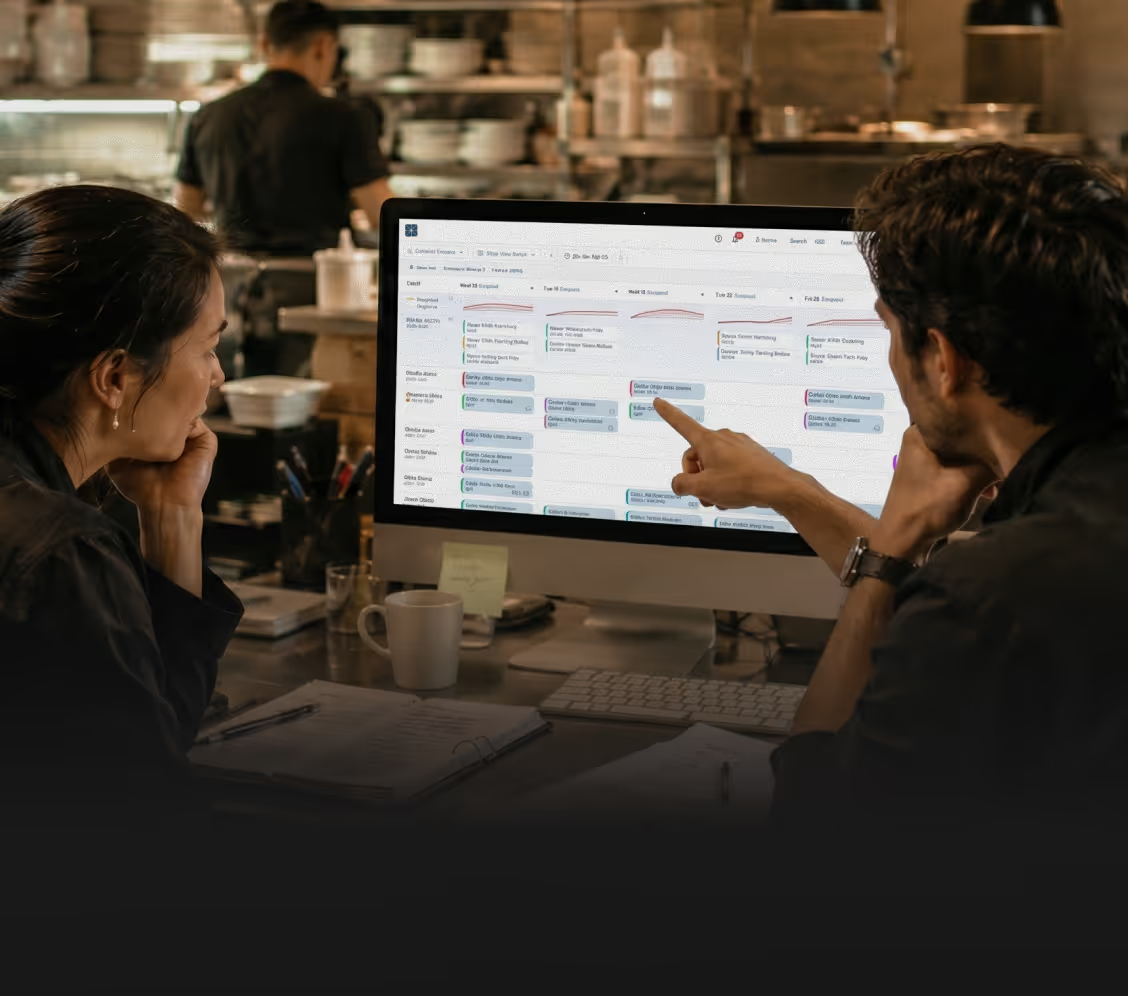


Ready to see what Rosnet will do for your restaurants?
Thousands of restaurant locations already run their food cost, labor, and operations on Rosnet.

